
The short answer
- Photos from several angles document the damaged glass, its position on the vehicle, and how the break looked when recorded.
- A dated note and the vehicle identification number connect the damage record to the right event and car.
- Keep the written scope, final invoice, and receipts together so the proposed work and completed work remain easy to compare.
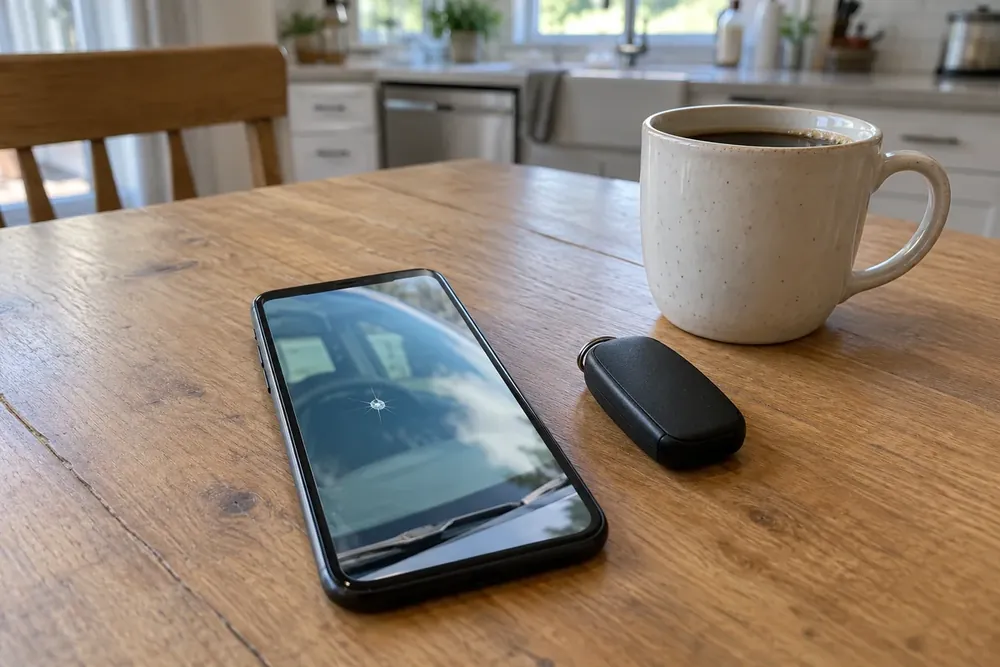
Photos and Paperwork That Describe the Glass Damage
A useful windshield damage file contains dated photos, vehicle details, the written scope, and receipts. Call about the glass now; the conversation can start with what you know. Add photos and paperwork as you collect them, keeping each item attached to the same vehicle and event.
Photos Show Both the Car and the Break
A wide view and closer views from several sides make the damage easier to understand later. Include a view that identifies which piece of glass is affected, then a closer view showing the damaged area. Keep the original photos alongside any copies you mark with arrows or notes.
Label photos with a date and a short description such as passenger side, lower corner, or near the mirror. If reflections hide part of the break, note that in the file rather than describing an unseen section. Separate photos of the original damage from photos taken after the work, using clearly named folders or dates.
Dates and Places Establish the Sequence
A short timeline records when the damage happened, when you noticed it, and when you photographed it. Keep those dates separate if they differ. If you do not know when the impact occurred, write the date you discovered the damage and say that the cause or earlier timing is unknown.
Record the place where the car was when you noticed the glass problem. An approximate location is more useful than a guessed street address presented as certain. Add later changes as new entries, leaving the original notes intact so the sequence stays clear.
Vehicle Details Keep the File Matched
The year, make, model, and vehicle identification number help distinguish the car from another vehicle in the household. VIN is short for vehicle identification number. The number identifies the particular vehicle.
Include a photo of the VIN visible at the dashboard when accessible. A dashboard VIN plate may be readable through the driver's side of the windshield. Use the car's own manual if its location differs. A registration record can also be kept with the vehicle details; the call does not depend on having every document ready.
The Written Scope Describes the Proposed Work
A written scope gives you a record of which glass and tasks are being discussed. Ask one of our local auto glass partners for a scope identifying the damaged windshield, the proposed work, and any relevant glass features. Keep the original version and any dated revisions together.
For windshield replacement, keep the scope with your insurance paperwork so the glass description stays attached to the event. Keep windshield repair records with insurance documents in the same way. If camera requirements come up, retain the written explanation of whether calibration is included or requires separate arrangements; the camera questions page helps organize that discussion.
Receipts Complete the Work Record
The final invoice and receipts show what was recorded after the work. Keep them next to the scope instead of replacing the earlier documents. Add any written care instructions to the same folder so they remain easy to find.
| Record | Details to keep |
|---|---|
| Photos | Original files, date, and angle or glass location |
| Event note | Date noticed, known event date, place, and observed changes |
| Vehicle details | Year, make, model, and VIN |
| Written scope | Glass identified, proposed tasks, and dated revisions |
| Completion papers | Final invoice, receipts, and written instructions |
For windshield replacement without insurance, retain the same dated photos, scope, and receipts. The purpose of the folder is a clear record of the vehicle and work. Use a single paper folder or digital folder, and keep earlier glass paperwork in a separate dated section within it.
Recordkeeping Leaves Visibility Clear
Keep paperwork stored away from your view through the glass, and keep the windshield clean. A folder can be completed gradually while the glass assessment moves forward. Call to discuss the damage, then add the written scope and finished work records as they become part of the file.